


Gekopieër
Solidarity secures victory on behalf of legal practitioners in case over Afrikaans attorneys’ admission examinations
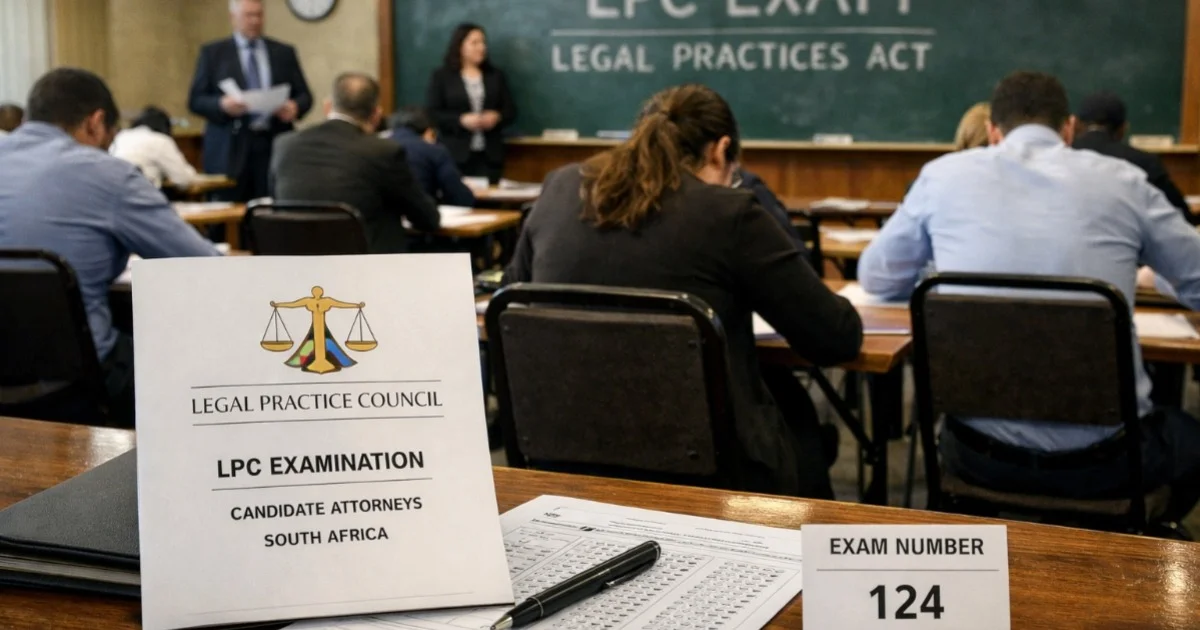
Solidarity welcomes the ruling by the Gauteng High Court ordering the Legal Practice Council (LPC) to disclose further documentation and information relating to the decision-making process that led to the abolition of Afrikaans as a language of the attorneys’ admission examinations.
The ruling confirms the position consistently maintained by Solidarity’s Legal Network: that the LPC is accountable to its members when making decisions that affect the legal profession.
According to Émil Glas, organiser of Solidarity’s Legal Network, this favourable judgment is about far more than simply winning an access-to-information case.
“The judgment affirms a fundamental principle of good governance: that a regulatory body funded by its members and acting on their behalf must be able to account for how decisions are made, who is responsible for those decisions, and the basis on which they are taken,” said Glas.
The Court ordered the LPC to disclose the relevant agendas, minutes, committee documents, attendance registers, as well as details of council members’ participation and votes relating to the decision. The judgment further makes it clear that the LPC cannot shield its decision-makers behind claims of privacy when they are performing official functions.
According to Glas, the ruling should serve as a wake-up call for the LPC.
“The LPC exists to regulate the legal profession. It is not a closed institution that can make decisions without accountability. Given the attacks on the legal profession over the past year, it is my view that the Solidarity Legal Network must take up the mantle of holding the LPC accountable whenever legal action makes this necessary.
“Legal practitioners, therefore, have the right to know how decisions affecting their profession are made,” he said.
Glas added that the Court has, in essence, confirmed that the LPC cannot treat transparency and accountability as optional principles.
“When decisions are made that affect the future of the legal profession, there must be a clear decision-making process that can be explained to the profession. This judgment emphasises that the LPC remains accountable to the broader legal profession and must act in accordance with its mandate.
“We hope the LPC will use this judgment as an opportunity to establish a new culture of transparency and accountability. The legal profession deserves a regulator that acts in the interests of the profession and promotes its continued development.
“I am also pleased that our right to act on behalf of our members, which has repeatedly been questioned, has now been recognised by the courts. Solidarity’s Legal Network has frequently been challenged over its right to represent its members, but this judgment confirms that we are indeed entitled to act on behalf of members of the legal profession,” Glas concluded.
Solidarity’s Legal Network calls on legal practitioners to become part of the network so that, together, we can promote transparency and accountability while continuing to strengthen and develop the legal profession.
Please find the judgment attached.