

Gekopieër
GDP figures are deeply disappointing
The latest GDP figures are just as disappointing as what South Africans have had to become accustomed to since 2012. It does not seem as though the government is making any effort to save South Africa from further impoverishment. Quarterly growth of 0.5%, or annual growth of 1.9%, is not enough to meet South Africans’ needs.
South Africa cannot afford to continue struggling along at such a low growth rate, particularly against the backdrop of xenophobia, and ongoing inequality and dissatisfaction. Low growth is the cause of nearly all the country’s biggest problems. The government, therefore, urgently needs to listen to the challenges faced by business leaders and take decisive action to reduce these obstacles.
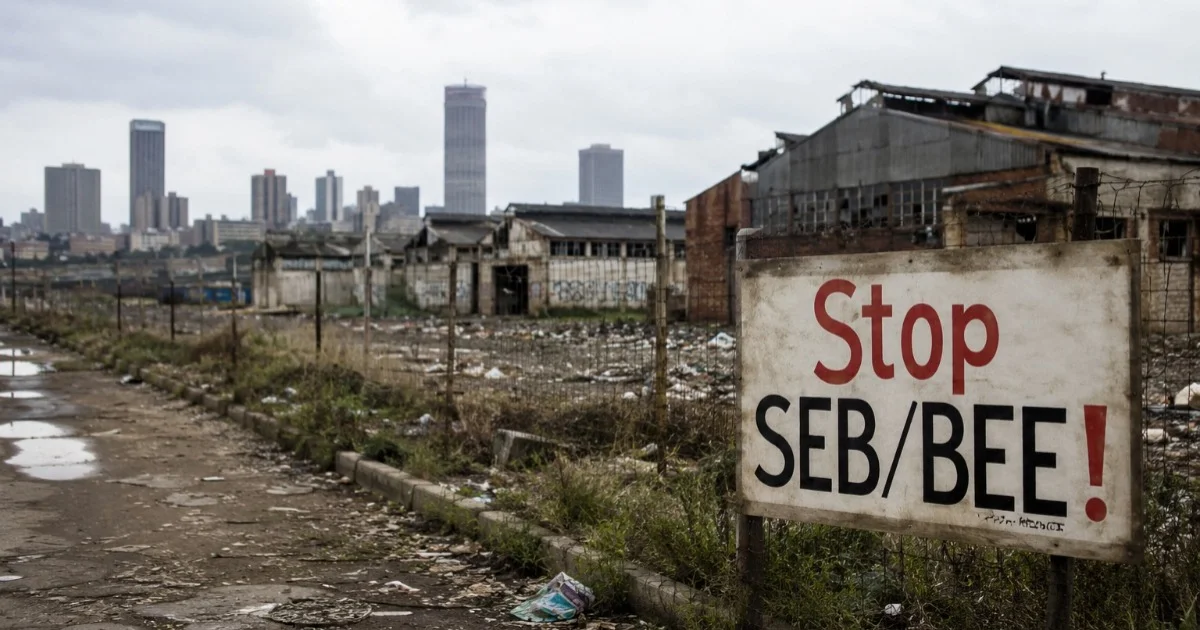
“When large enterprises tell the government that expensive electricity is a problem, the government remains silent. When entire industries complain about high transport costs and the deterioration at Transnet, they struggle to get more than half-baked promises from the government. When they complain about the costs of Black Economic Empowerment (BEE), the government promises to make this legislation even stricter. The government itself is the greatest enemy of growth,” says Theuns du Buisson, economic researcher at the Solidarity Research Institute (SRI).
This failure to listen to the needs of businesses is particularly evident in the decline of -0.8% in manufacturing. Manufacturing accounted for roughly a quarter of the South African economy in the 1980s. Today, it makes up less than 12% and continues to shrink. Because it is a labour-intensive industry, specific attention should be paid to restoring the sector and creating jobs.
“The new figures once again show fixed capital formation at a depressing -1.1%. The National Development Plan aims to raise this to 30% of GDP per year, but the government continues to introduce policies that penalise capital rather than reward it. It has long been time to drastically reduce capital taxation, and to make incentives part of the solution.”
If the South African government does not make it worthwhile to invest here, investors will continue to withhold investment, as reflected in the fixed capital formation figures.
“This sustained low growth should serve as a wake-up call to the government. At present, foreigners are increasingly being blamed, but it is only a matter of time before South Africans turn against each other because of economic pressure. Every possible effort must be made to prevent this.”