


Gekopieër
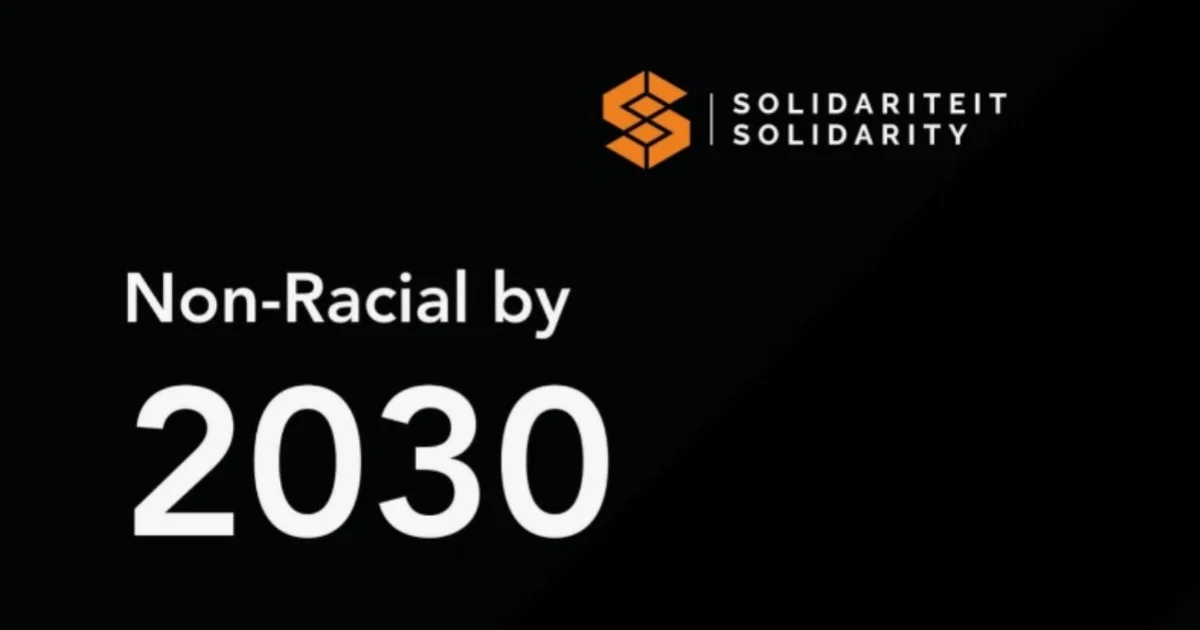
Solidarity proposes roadmap for a race-free South Africa by 2030
- The report can be downloaded here.
Solidarity is of the opinion that South Africa can and should achieve a race-free dispensation by 2030 and today it launched a comprehensive roadmap drafted by the Solidarity Research Institute (SRI) to achieve this.
The report is entitled “Race-Free by 2030”, and it provides concrete and realistic proposals to gradually transition South Africa from race-based legislation to real empowerment, based on need, economic growth and job creation.
According to Connie Mulder, head of the SRI, the current racial dispensation has failed to truly improve the lives of poor South Africans.
“The past three decades have proven that racial legislation does not solve poverty, unemployment and inequality.
“Today, South Africa faces record levels of unemployment, poor economic growth and millions of people without hope of getting a job or hope of making progress. It is time to acknowledge frankly that the current dispensation does not work,” Mulder said.
The report does not merely examine superficial amendments to existing racial legislation or alternative forms of black economic empowerment (BBE). Rather, it examines what a realistic transition within current legislation might look like in order to gradually free South Africa from race-based legislation by an end date in 2030.
“Affirmative action and similar measures have always been supposed to be temporary in nature. The question, therefore, is simply: Where does the finish line lie?
“Our research shows that it is possible to achieve a race-free South Africa if a responsible phasing out of this policy could begin now,” Mulder said.
The report contends that the current racial dispensation has harmed the economy to the detriment of all South Africans.
According to the research, the cost of BEE compliance places a huge burden on businesses, investment and job creation, while at the same time only a small elite, rather than ordinary, unemployed South Africans, is mainly benefitting from it.
These harsh realities of racial laws are now well-known and are widely acknowledged.
The report therefore proposes a phased approach in which race-based legislation is systematically replaced by measures that focus on real socio-economic needs, including poverty, youth unemployment, training and economic growth.
It includes practical suggestions on BEE, employee share ownership programmes, foreign investment and a more realistic approach to employment equity.
“The focus needs to shift from race to real empowerment. South Africans do not need more racial classification – they need jobs, economic growth, safety, functioning infrastructure and opportunities. We need to start focusing on the scoreboard rather than on the team photo,” Mulder said.
Solidarity also plans to bring this roadmap towards racial freedom to the attention of business leaders and interest groups in South Africa as well as abroad.